
The jersey fits differently this season. The young athlete notices it before training, while teammates are changing and joking around them. Later, a coach comments on how their body has changed. The words may have been intended as harmless observation. The athlete hears a judgment and begins to wonder whether there is still a place for them in the sport.
Adolescence makes bodies visible at precisely the moment they are changing quickly. Growth alters strength, balance, coordination, appearance and the way a person feels in clothing. Sport can be a source of pride in that process. It can also teach shame if performance expectations turn every change into a public verdict. The question for coaches is not how to stop bodies changing. It is how to protect dignity while helping young people develop safely.
Sport can help adolescents develop a healthy relationship with movement and capability. It can also create pressure around weight, shape, strength and appearance, especially when adults use careless language or treat a changing body as a problem to correct. Coaches do not have to become specialists in adolescent medicine to recognize an essential principle: growing bodies deserve respect, adequate nourishment and training adapted to development.
The objective is not to eliminate physical assessment from sport. In some disciplines, body composition, strength and movement characteristics may have legitimate professional relevance. The objective is to ensure that any assessment has a clear purpose, appropriate expertise, safeguards and a meaningful benefit for the individual athlete.
Puberty does not follow the team calendar
Age categories are administratively convenient. Biology follows its own timetable. Two adolescents of the same calendar age may differ in height, muscular development, coordination, energy requirements and emotional experience. These differences can change performance without proving anything permanent about motivation or potential.
A player who experiences a rapid growth spurt may briefly feel less coordinated because their body is changing. An athlete who matures later may be temporarily disadvantaged in a physically demanding role. Coaches can respond with patient instruction, appropriately adjusted load and a focus on skills that develop over time.
The harmful alternative is to interpret every change as a character problem. “You have become clumsy” or “You are not trying hard enough” can turn a normal developmental period into a negative identity. A more useful conversation asks what has changed, what the athlete notices and which training adjustments could help.
The difference between health and appearance
An athlete can look strong and still have a health problem. Someone who does not fit a narrow visual ideal may be entirely healthy and capable. Appearance alone does not establish readiness, nutritional adequacy or performance potential.
The International Olympic Committee’s 2023 consensus on Relative Energy Deficiency in Sport, known as REDs, describes health and performance problems that can occur when energy availability is insufficient for the demands placed on the body. The guidance concerns female and male athletes and emphasizes appropriate clinical assessment and prevention. It does not justify amateur diagnosis by looking at somebody’s weight.
Coaches should avoid prescribing restrictive eating or body-composition goals outside their competence. When nutrition or health concerns arise, qualified sports physicians and nutrition professionals should guide evaluation. A teenager must never be made publicly accountable for their body shape in the name of team discipline.
The changing-room problem
A sport’s social culture can magnify ordinary insecurities. Uniforms, changing rooms, photographs and group weigh-ins may create discomfort, particularly during adolescence. A person who feels exposed may withdraw from participation rather than explain why. Adults can easily misinterpret this as declining interest.
Respectful organizations give thought to privacy. They make changing arrangements appropriate for their athletes, avoid unnecessary public body measurements and do not turn appearance into entertainment. Team jokes about height, weight, skin or development are not automatically harmless because they are familiar.
Athletes should be able to raise a concern without being dismissed as oversensitive. A practical response may involve an alternative uniform option, a private discussion or clearer team rules. Not every concern requires the same solution, but each deserves to be heard.
Social media creates a distorted comparison
An adolescent athlete may see highly edited bodies, selective training clips and transformation narratives online. These images can create the impression that every successful competitor has the same physique or follows a dramatic diet. The content often omits age, genetics, medical supervision and the realities of professional training.
Adults can support media literacy by asking what an image actually shows and what it leaves out. An athlete does not need to believe that every photograph is fraudulent. They do need to understand that visibility is selective and that an online appearance is not an individualized health recommendation.
Teams should also consider their own media. Do promotional posts celebrate only certain body types? Are young athletes asked for appropriate permission before photos are shared? Does a club create pressure by photographing body changes as proof of commitment? Marketing decisions can shape wellbeing.
Language matters in everyday coaching
Coaches sometimes use expressions about eating, weight or appearance as shorthand for performance. A comment such as “You look heavy today” is rarely a useful technical instruction. It can be embarrassing, inaccurate and difficult for a young athlete to interpret.
A more responsible vocabulary centers on what can be observed in the task: movement, pacing, recovery, technical control and medical indicators evaluated by qualified professionals. If a health concern needs discussion, the conversation should occur privately and with appropriate support.
Parents can reinforce this approach at home. They can emphasize nourishment, rest, enjoyment and recovery rather than turning meals into negotiations about sporting worth. Children should not have to earn food through exercise or earn affection through a particular appearance.
Training load must respect development
An athlete undergoing rapid physical change may need adjustments to technique, recovery and load. Injuries, fatigue, pain and changes in performance should be taken seriously rather than treated as evidence that someone has become weak. Individual clinical assessment is essential when symptoms suggest a medical problem.
A plan can remain ambitious while allowing adaptation. Coaches can vary exercises, monitor workload, schedule recovery and collaborate with qualified clinicians. Athletes should understand that modifying a session is sometimes intelligent training, not failure.
The aim is to support sustained development. The next tournament matters, but so does the body the person will live in for decades after youth competition.
When professional advice is needed
Persistent distress about body image, restrictive eating, significant changes in wellbeing or concerning physical symptoms warrant careful attention. Coaches and peers should not diagnose eating disorders or REDs. They should know how to raise concerns respectfully and connect the athlete with appropriately trained professionals.
The IOC’s REDs consensus introduces a structured clinical approach and stresses that risk assessment belongs within qualified care. A traffic-light framework or symptom list should not become a tool for teammates to label one another. Medical confidentiality and safeguarding obligations remain essential.
It is also important to avoid assuming that difficulties affect only girls or only athletes in a few aesthetic sports. Health issues and body-image pressures can occur across genders and disciplines.
A dignity-first policy for clubs
- Explain why any body-related measurement is necessary and who will use the data.
- Avoid public weigh-ins, jokes or unqualified advice about diets and body composition.
- Provide privacy and appropriate choices in clothing and changing arrangements.
- Plan training with awareness of growth and individual variation.
- Include qualified clinicians and nutrition professionals for health concerns.
- Teach athletes to question unrealistic social-media comparisons.
- Protect confidential information, especially for minors.
- Praise learning, cooperation and competence rather than a narrow visual ideal.
These policies are not cosmetic. They affect whether young people feel safe enough to continue participating, report problems and accept appropriate support.
The body is not an audition for belonging
Sport can celebrate extraordinary human movement without demanding that every athlete look extraordinary. A child should not need a particular height or shape to be treated with respect. A talented teenager should not be pressured to risk health for a short-term appearance or selection advantage.
The language of good coaching should help young people understand what their bodies can do, how those capabilities change and when professional guidance is needed. It should never reduce a developing person to an object for public comparison.
Growing bodies are not problems to solve. They are people developing through sport.
A hypothetical conversation about a changing body
A fifteen-year-old athlete tells a coach that their usual uniform no longer feels comfortable. The coach could dismiss the concern as trivial, make an embarrassing comment in front of teammates or ask whether there is a practical adjustment that would help. The responses communicate very different messages about who controls the athlete’s experience.
The third response need not involve a major expense. The club might offer alternative approved clothing, a private conversation or clearer information about available sizes. It should avoid forcing the athlete to explain intimate details to a large group. The objective is to protect participation while maintaining the sport’s legitimate rules and safety requirements.
This example is hypothetical. It illustrates why respect often depends on small organizational decisions. A person who feels able to raise a concern is more likely to remain connected to sport than someone who expects humiliation.
Why body-related data needs special treatment
Coaches and clinicians sometimes use measurements to understand health, growth or performance. But collecting data is not automatically beneficial. Measurements have specific purposes and limitations. In young people, interpretation requires knowledge of development and individual circumstances.
A club should ask whether a measurement is necessary, who is qualified to take it, and how the result will influence care or training. It should explain who can access the information and how it will be protected. Public disclosure of weight or body-composition data is rarely justified merely because the person participates in sport.
The same principle applies to digital tools. A dashboard may make it easy to compare bodies, but ease of comparison is not evidence that comparison is appropriate. Sensitive data must be managed according to applicable law, safeguarding rules and professional standards.
The performance risks of casual nutritional advice
Athletes may hear suggestions to skip meals, restrict particular foods or chase an appearance associated with elite competitors. Such advice can be particularly risky when training demands are high. The IOC’s REDs consensus describes how inadequate energy availability can affect multiple physiological systems and performance.
The condition cannot be diagnosed from appearance, a social-media photograph or an isolated training observation. Clinical assessment may involve medical history, symptoms and specialized evaluation. Coaches should not use an online checklist to label someone.
A better organizational policy is straightforward: provide age-appropriate general education, encourage adequate nourishment and refer individual concerns to qualified sports nutrition and medical professionals. Where minors are involved, safeguarding and appropriate family participation are essential.
Sports cultures that reward a narrow image
Certain disciplines have long emphasized particular body shapes or aesthetic standards. Other sports may privilege size, muscularity or leanness. Technical requirements can be real, but assumptions about how a successful athlete should look can become exaggerated and harmful.
A team should distinguish task-specific demands from cultural habits. Is a comment about physique tied to a legitimate, clinically evaluated training decision, or is it merely an inherited preference? Would the same standard be applied respectfully across different athletes? Can the person question the decision without fear?
Diversity in sporting bodies deserves visibility because it challenges the idea that competence has one appearance. Editorial photographs should represent people in different roles and disciplines without implying that any image proves health or performance level.
Growth, injury and temporary changes in coordination
A young person experiencing rapid growth may find familiar movements unexpectedly difficult. Changes in limb length, strength and body proportions can require technical adaptation. Coaches should avoid drawing permanent conclusions from a short period of awkwardness or inconsistency.
Thoughtful training may involve revisiting fundamental skills, adjusting workload or seeking medical assessment when symptoms warrant it. The approach must remain individualized. Not every performance change is caused by puberty, and pain should not be dismissed as ordinary growing.
A supportive conversation connects observable behavior with practical next steps. It does not tell the athlete that their body has become a problem. The aim is sustained movement competence and health, not forcing a teenager into a fixed template.
Parents can protect a child's relationship with food and movement
Families influence how young athletes understand eating, rest and physical appearance. Comments made casually at home may be interpreted through the intense comparison already present in sport. Parents can therefore make a difference by separating nourishment from moral judgment.
Rather than praising restriction or treating food as a reward for successful performance, adults can support regular meals, appropriate recovery and a balanced relationship with activity. Individual nutritional needs should be discussed with qualified professionals, particularly when medical concerns arise.
A child should feel able to speak about discomfort without being told they are vain or overly sensitive. Listening does not require agreeing with every self-assessment. It means making room for a constructive conversation and seeking help where necessary.
A club policy that is visible in daily behavior
Policies are useful only when implemented. A written promise to respect athletes will mean little if staff regularly make jokes about weight or share private measurements. Clubs can provide staff training, clear reporting routes and predictable responses to inappropriate comments.
Coaches should know the limits of their competence. A safeguarding lead should be identifiable. Athletes and parents should understand how health-related concerns are handled. A professional may need to review training implications, while the athlete retains privacy and dignity.
The principle is not complex: the body is central to sport, but the person is more than the body. Good organizations act as though this remains true on every training day, not only in public campaigns.
The long-term goal is a healthy adult relationship with sport
Youth coaching should be judged partly by what happens after the immediate competitive years. Does the athlete retain confidence in movement? Can they interpret physical changes without shame? Do they understand that health, identity and performance are related but not identical?
A teenager who leaves an elite pathway may continue enjoying sport for decades. That outcome deserves attention. When adults protect health and dignity during developmental change, they give young people an opportunity to build lifelong habits rather than associating activity with public judgment.
No club can guarantee a positive body image. It can, however, avoid unnecessary harm, respond thoughtfully to concerns and make qualified care accessible. These are realistic commitments that create a better starting point for everyone.
An eight-point dignity standard for adolescent sport
1. Offer reasonable privacy. Physical development can change how comfortable a young person feels in a changing room or uniform. Clubs should make it possible to ask private questions and should avoid public commentary about bodies. Such arrangements matter even when no complaint has been formally made.
2. Review clothing requirements. Some competition rules specify uniforms and safety equipment. Within those constraints, organizations can consider alternatives that preserve movement and comfort. Tradition alone is not a sufficient answer to every concern.
3. Focus feedback on movement and skills. A coach can describe body position, rhythm, strength development or technique without labeling a young person's appearance as wrong. Performance feedback should be relevant to the task, specific and respectful.
4. Avoid public comparisons. Adolescents vary in growth, maturation and training history. Comparing bodies in front of teammates can intensify self-consciousness and obscure what each athlete needs to learn. Individual development plans are more informative than casual labels.
5. Keep medical issues with qualified professionals. Pain, disordered eating concerns, menstrual symptoms and persistent distress require the appropriate expertise. Coaches can notice and refer, but diagnosis and treatment should not become group conversations or improvised advice.
6. Protect photographs and video. Clubs should explain why recording occurs, who can view footage and what is shared publicly. A young athlete's image must not be used to mock, rank or expose the person's body. Privacy and safeguarding are especially important for minors.
7. Ask about the environment. Anonymous feedback on changing facilities, uniforms, coaching language and belonging may uncover problems that adults do not see. Collect only necessary information and act on the results rather than treating the survey as a publicity exercise.
8. Preserve different ways to participate. A teenager who no longer wants intensive competition may still value recreational sport, friendship and movement. Offering a lower-pressure route is not a failure of ambition; it can protect a lifelong relationship with physical activity.
The 2025 qualitative study of former ballet, swimming and gymnastics participants is valuable because it makes individual experiences visible. Its sample is not a representative estimate of every athlete's experience. Clubs should use those findings as questions to investigate in their own setting, not as proof that every girl shares the same reason for leaving.
A humane sport culture understands that bodies are changing while identities, friendships and confidence are developing too. Technical excellence can remain a goal without turning appearance into an audition for dignity.
The words a young athlete remembers
A brief remark about a body may appear insignificant to an adult focused on performance. For an adolescent already managing comparison, puberty and the opinions of peers, it can acquire a different meaning. Coaches can avoid this risk by explaining technical changes without personal judgments about shape. When an issue genuinely concerns health, a private conversation with an appropriately qualified professional is more suitable than a public comment in front of teammates.
A club's responsibility extends to its environment: uniforms, photographs, changing facilities, digital sharing and the language used by influential adults. A young person should be able to develop physical skills while also developing trust in a changing body. The sport should support that process, not turn normal development into a reason for embarrassment or exclusion.
That responsibility applies to everyone involved: clubs, parents, coaches, peers, sponsors and media partners. A sporting environment should not expect a young athlete to tolerate avoidable shame as a price of participation. Listening carefully, responding privately and seeking qualified support when necessary can protect both health and the pleasure of sport. The goal is development, not conformity to a single appearance.
Read across Sportive Minds: a body is not an identity
The Journal's When an Injury Changes Who You Think You Are explores what happens when sport suddenly alters someone's relationship with movement and belonging. Puberty is not an injury, and the two experiences should not be confused. They do, however, raise a shared ethical question: does a club value an athlete only when the body performs in a familiar way?
The answer appears not only in training plans but in uniforms, language, privacy, medical boundaries and whether young people can ask for help without embarrassment.
Evidence context and limits
The IOC REDs consensus (Mountjoy et al., 2023) addresses health consequences of low energy availability in sport. Heikura et al. (2024, online) investigated a clinical assessment tool among more than 200 elite athletes. These sources do not justify diagnosing a child, prescribing diets or inferring health from appearance.
Research and further reading
- Mountjoy, M., et al. (2023). 2023 International Olympic Committee's (IOC) consensus statement on Relative Energy Deficiency in Sport (REDs). British Journal of Sports Medicine, 57(17), 1073–1097. DOI: 10.1136/bjsports-2023-106994. Original source
- Heikura, I. A., et al. (2024, online; 2025 print issue). Application of the IOC Relative Energy Deficiency in Sport (REDs) Clinical Assessment Tool version 2 (CAT2) across 200+ elite athletes. British Journal of Sports Medicine, 59(1), 24–35. DOI: 10.1136/bjsports-2024-108121. Original source
- World Health Organization (2020). WHO guidelines on physical activity and sedentary behaviour. Geneva: WHO. ISBN 978-92-4-001512-8. Original source
- Reardon, C. L., et al. (2026). Mental health in elite athletes: International Olympic Committee consensus statement (2026). British Journal of Sports Medicine, 60(15), 1083–1130. DOI: 10.1136/bjsports-2025-111514. Original source
*Editorial note: This article is educational and not an individualized health, dietary or diagnostic recommendation. Young athletes with concerning symptoms should receive qualified care.*
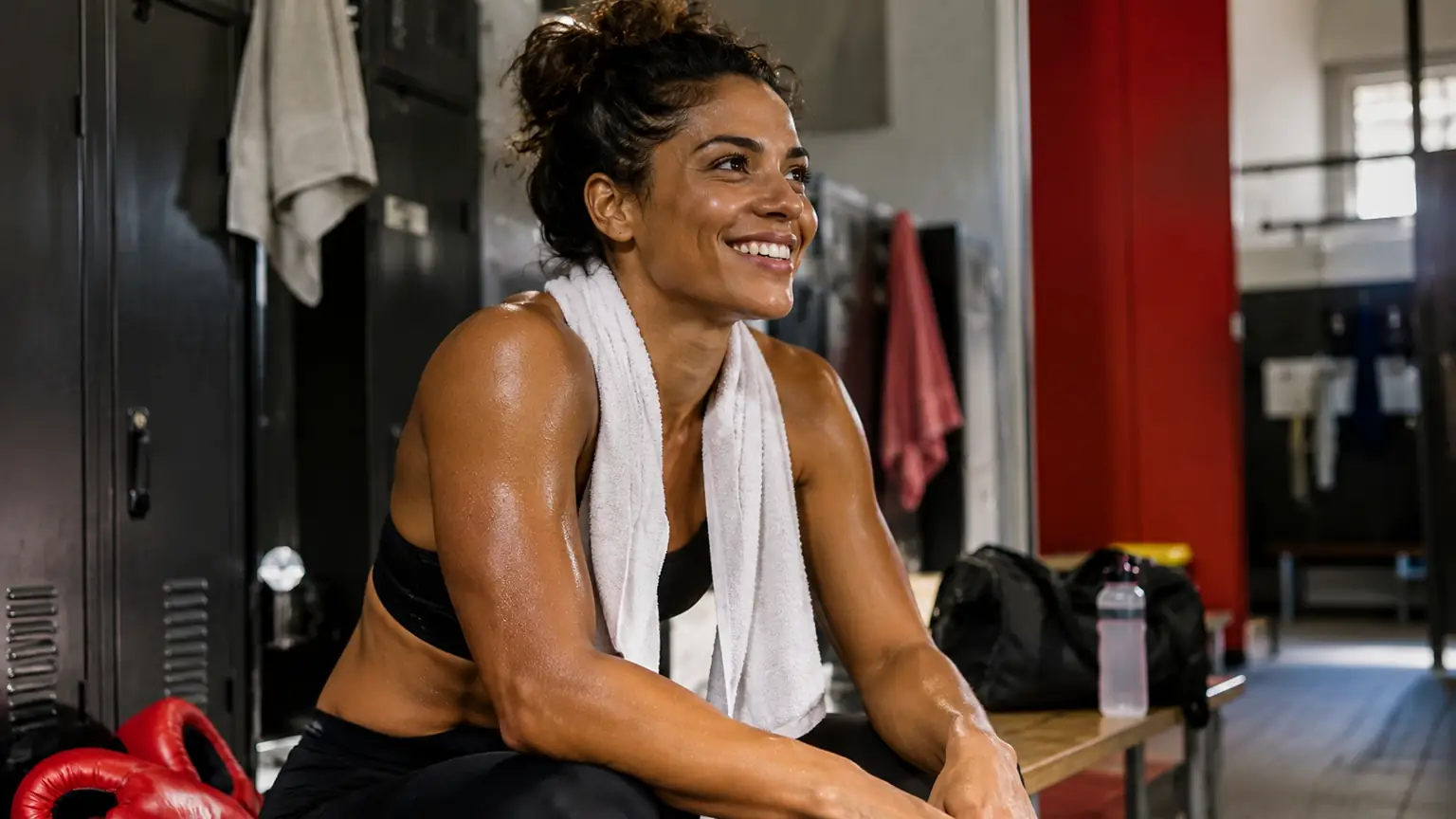
Editorial illustration using an original Sportive Minds photograph featuring fictional people; not documentary reporting or endorsement.